
Building Resilient Retirement Income Strategies.
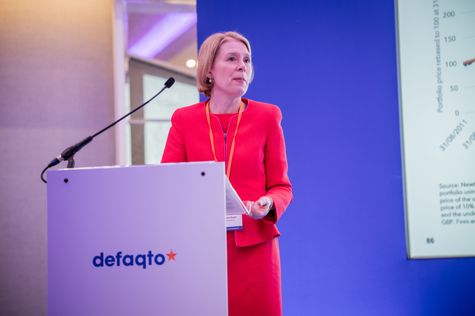
At the Defaqto “Unlocking Retirement Strategies” conference, Catherine Doyle, Investment Specialist at BNY Investments, addressed one of the most pressing challenges for financial planners today: how to understand and manage risk to retirement income in a changing economic and regulatory environment.
The Real Risks in Retirement
Echoing the opening keynote at the conference from The Institute of Fiscal Studies, Catherine referenced Nobel laureate William Sharpe, who famously said that decumulation is “the nastiest, hardest problem in finance.” This complexity is now under the spotlight, with the FCA’s review of retirement advice raising concerns about inconsistent risk profiling and a lack of attention to clients’ capacity for loss. The central risk? That income runs out too soon. The other major threat? That inflation silently erodes purchasing power.
The challenge, Doyle explained, is to think differently about risk for retirement clients - moving beyond capital volatility to consider long-term income sustainability.
The Retirement Income Trade-offs
Drawing on research from 2006, Doyle described retirees’ four core income goals: large, durable, real, and stable income. Achieving all four is extremely difficult, and advisers must help clients make conscious trade-offs between:
- Legacy vs lifestyle
- Income level vs income persistence
- Inflation protection vs income stability
- Secure lifetime income (e.g., annuities) vs flexibility.
These trade-offs are at the heart of modern retirement planning, particularly in a world increasingly reliant on Defined Contribution (DC) pensions.
Income Generation and Risk Management
Catherine shared two core methods for retirement income:
- Total return + unit encashment – relying on portfolio growth and drawing down assets.
- Natural income – using dividends, coupons, or interest without encroaching on capital.
Each method carries distinct risks. For total return, volatility matters. Yet traditional volatility metrics don’t always tell the full story. In BNY’s research, smoothing returns improved the investment journey but didn’t necessarily improve outcomes. Lower volatility can mean missing rebounds, as seen post-COVID.
Instead, she recommended focusing on risk characteristics that matter more for income durability—such as positive skew, reduced downside exposure, and bounce-back potential
Multi-Asset Solutions for Modern Retirement
Doyle advocated for multi-asset income strategies that blend growth and yield while adapting to changing market conditions. These strategies offer potential for more stable, predictable income, which not only helps preserve the portfolio but also simplifies planning and administration.
She concluded by reminding advisers that risk in retirement is fundamentally more complex than during accumulation. For example, a low-volatility portfolio may still pose long-term risk if it lacks the ability to recover or protect against inflation.