
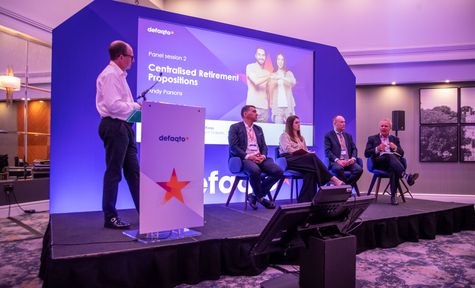
The emotional realities of retirement, the need for client education, and the importance of flexible planning strategies were front and centre at Defaqto’s recent Unlocking Retirement Strategies conference.
During a thought-provoking panel session, industry experts urged advisers to look beyond investment products and focus on behavioural change, mindset shifts and evolving needs if they want to deliver meaningful retirement strategies.
Chaired by Andy Parsons, Head of Investment & Protection at Defaqto, the panel featured Ian Kloss (RBC Brewin Dolphin), David Jane (Premier Miton), Samantha Pardoe (Standard Life), and IFA, Billy Burrows.
Rethinking risk
Ian Kloss opened the session with a reminder that risk is more than a number—it's a state of mind. “One of the biggest risks is how clients understand the word ‘risk’ itself,” he said. Retirement, he noted, is no longer a “cliff edge” but a phased transition, and clients often need just as much emotional preparation as financial.
Emotional realities: Fear of running out
Samantha Pardoe picked up the theme with insights from Standard Life’s Retirement Voice research. “The number one fear across all demographics is running out of money,” she explained. From volatility, Trump, market shocks to unknown care costs, many external uncertainties feed into this anxiety.
“She highlighted the ‘retirement risk zone’ – the critical five to ten years before retirement – when financial behaviour starts to shift. In this period, she stressed the importance of having a well-defined Retirement Income Strategy in place. Supported by solutions such as smooth funds and guaranteed income, which can give clients the confidence and “license to spend.”
Planning the transition early
David Jane highlighted the value of helping clients transition into retirement solutions well before they stop working provides three major advantages:
- It allows clients to benefit from volatility rather than fear it
- Offers a “try before you buy” approach to income strategies
- Gives advisers a concrete way to demonstrate alignment with Consumer Duty requirements.
Three pots, one strategy
IFA, Billy Burrows brought behavioural finance to the forefront, reminding advisers to give equal weight to behaviour as they do products. “Clients worry about the unexpected—tax rule changes, market moves.” His preferred three-pot model approach (cash, risk-rated, and growth funds) balances psychological comfort with practical planning. “Cash might be a drag, but it provides peace of mind. Growth can equal it out, whilst cashflow modelling brings it all together.”
CRPs need flexibility
When asked what makes a robust CRP, Kloss stressed it must be built around individual goals - not just investments. “We’re making binary decisions on clients’ behalf in an increasingly complex world,” he said. “A good CRP should adapt to life's changes —from late-life care, unexpected emergencies to late-life income needs.”
David noted that natural income solutions remain underdeveloped. “We need more solutions that deliver both capital growth and reliable income. Right now, too few do.”
A look at annuities
Annuities also made a comeback in the conversation. Thanks to higher rates and clients’ growing appetite for certainty, they’re seeing renewed interest. “They’re like a mortgage in reverse,” Burrows said. “They’re misunderstand, but they bring peace of mind.” Samantha cited Standard Life’s Guaranteed Lifetime Income Plan as an example of innovation in the space. “Clients want certainty, but they don’t want to lose flexibility. That’s the balance we’re working on.”
Service not sales
The panel closed by looking to the future. Ian predicted a structural shift from product-led advice to service-led models. With regulatory pressures and adviser consolidation, he warned the number of advisers could shrink significantly by 2035. But those who remain—and thrive—will be those that show real value – be client led, service-led and goal-driven.
The bottom line
CRPs are no longer just about products —they’re about people. Advisers must support clients through mindset shifts, build flexible strategies rooted in goals, and provide a sense of security that enables retirees not just to survive – but to thrive.