
There’s always a buzz around BIBA, but this year, it felt different. The conversations were more focused, the challenges more tangible, and the appetite for change more urgent.
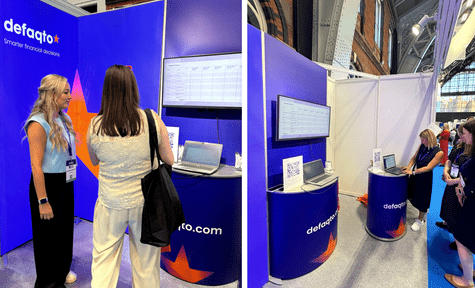
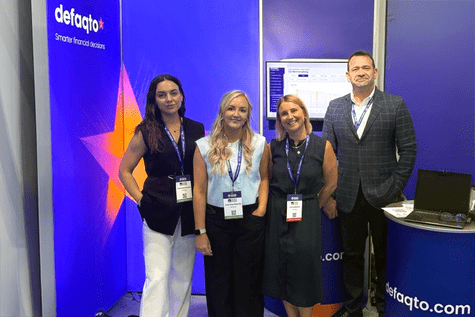
For us at Defaqto, Matrix 360 took centre stage. It was the foundation of our stand and the spark for some of the most insightful discussions we’ve had all year. Alongside my colleagues Carly, Charlotte and Goda, we headed to Manchester to showcase how Matrix 360 is helping providers make smarter, faster product decisions and to hear first hand how the market is evolving.
What followed were open, energised conversations with providers, brokers and tech partners, all navigating similar challenges and all keen to explore what’s next. Matrix 360 helped us frame those discussions, zooming out to see the bigger picture while also drilling into the detail that matters.
AI is here. But are we ready?
Let’s get the obvious out of the way: AI was everywhere. Every other conversation circled back to how technology — particularly machine learning — is influencing pricing, customer interaction, and product design. But it’s not just about potential. It’s about preparedness. Many providers admitted they’re still grappling with siloed data and fragmented intelligence – unable to see how the market’s evolving or where the real opportunities lie.
That’s exactly where Matrix 360 has been landing well. As a single-source market intelligence tool — it helps bring together the full picture — integrating the UK’s richest product data with intelligent analytics so insurers can see not just what’s happening, but what to do about it. In a world of infinite data, clarity is the new advantage.
Cost pressures and the 'soft cycle' reality
Charlotte from our team put it simply: “cost-cutting is back.” From high claims and customer churn to increased reliance on aggregators, insurers are feeling the squeeze.
The soft pricing cycle we’re in doesn’t help either. With profitability under pressure, providers are re-evaluating everything — from distribution strategies to panel structures — in search of leaner, more efficient operating models.
We had some great conversations about how tools like Matrix 360 can support this shift: not by overhauling what teams already have, but by helping them make better use of existing data and insight. It’s not a silver bullet, but it’s proving helpful for teams looking to adapt more quickly and confidently.
A quiet revolution: from panels to solus underwriting
One of the most interesting developments we picked up on was the growing interest in solus underwriting models. Brokers, particularly those navigating the demands of Consumer Duty, are increasingly looking to reduce complexity in their propositions.
For many, simplifying the number of partners involved is a way to ease governance pressures and reduce operational overhead. That shift came up time and again – and while everyone’s at a different point in the journey, it’s clear there’s a real appetite for clarity and control.
It was encouraging to hear that having access to clearer market insights is helping some teams make those decisions more confidently. And we’ll continue working with clients to make sure Matrix 360 evolves in line with what they need to support that.
Customer understanding, value and outcomes
A recurring theme in many of our conversations — and a crucial one — was how providers are tackling the delivery of good customer outcomes. Under Consumer Duty, there's rightly more focus on ensuring products offer genuine value and that customers can understand and engage with what they’re buying. We were encouraged by the openness of the discussions around this. Everyone is grappling with it in slightly different ways, but the shared intent is clear. It’s something we’re actively building into our future planning, both for Matrix 360 and our wider work on Consumer Guidance.
Star Ratings: still a differentiator?
We did field a few questions about the number of 5 Star Ratings in the market. It’s true. As the market evolves, more products are meeting higher standards. But that’s not the whole story. We constantly review our methodology to ensure the Star Ratings provide a fair reflection of the variation in product quality across the market, while still offering any provider the opportunity to achieve a high rating by improving their product proposition. We recalibrate the criteria annually to keep pace with changing market standards. You can read more about this in our Star Ratings guide, recently updated for 2025.
And with Matrix 360, providers can go beyond the rating to use it as one of many indicators to understand how they compare, where they stand competitively and how to edge ahead.
Global risk feels local
BIBA wasn’t just about products – it was about resilience. We heard story after story of supply-chain disruption, regulatory change, and broader economic pressures creating new challenges across the board. As one attendee put it: “Risk modelling is no longer just technical. It’s operational, financial, and often political too.” That kind of complexity is pushing firms to think more holistically — not just about their products, but about how their businesses are structured to absorb and adapt to change.
Final Thoughts: It’s All About the Bigger Picture
The conversations at BIBA 2025 made one thing crystal clear: insurers need to see the bigger picture. Not just data. Not just analytics. But a joined-up view of how the market is shifting and what that means for them.
That’s why we’ve built Matrix 360 to be more than just software. It’s a next-generation platform for product creation, optimisation and insight to help providers navigate change with confidence, speed and clarity.
Thanks to everyone who stopped by the stand. I’d love to continue the conversation, so do drop me a note via marketing@defaqto.com